
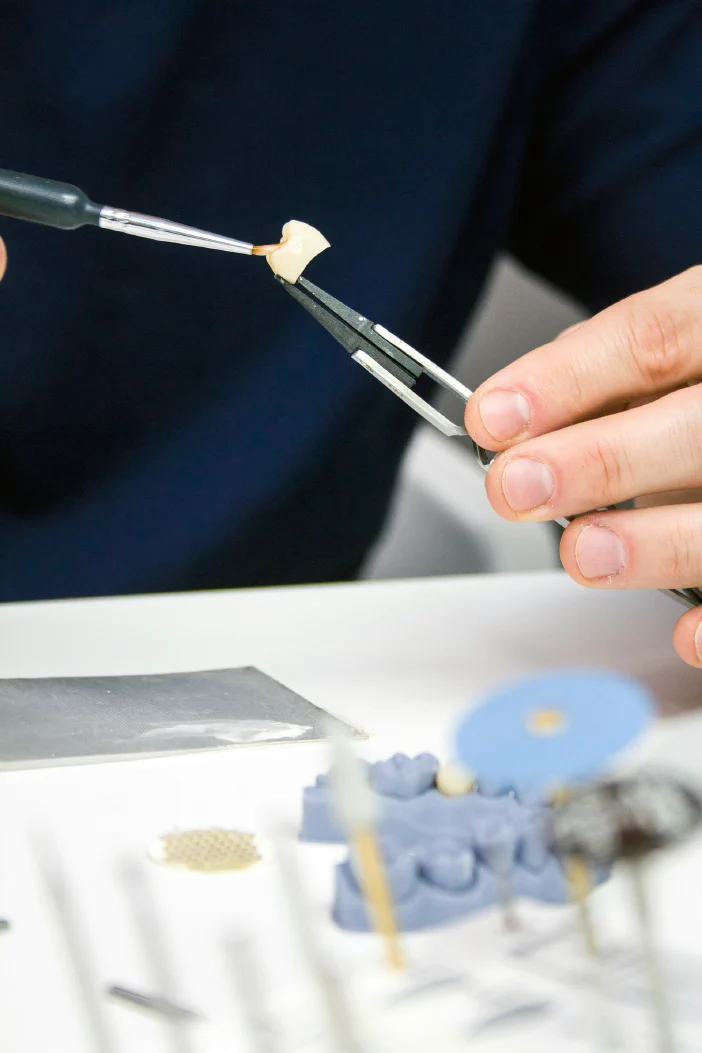
A crown covers and protects a damaged tooth, restoring its shape, strength, and appearance. The cost depends entirely on which material you choose.
Metal crowns cost £400-£600. Porcelain-fused-to-metal costs £500-£800. All-porcelain crowns cost £600-£850. Zirconia crowns cost £700-£1,200. Gold crowns cost £600-£1,500.
Each material has specific advantages. Metal crowns last longest but look obviously metallic. Porcelain looks natural but chips more easily. Zirconia combines strength with aesthetics. Your choice depends on whether you're crowning a front tooth (where appearance matters) or a back tooth (where durability matters more).
Let's break down exactly what you're getting for your money.
Why Crowns Cost What They Do
The price reflects three main factors: the material, the laboratory work, and the dentist's time.
The material cost varies significantly. Metal alloys are cheapest. Porcelain costs more because it requires skilled layering to achieve a natural appearance. Zirconia sits at the premium end because it's milled from a solid block of material using computer-aided design technology.
Laboratory fees account for a substantial portion of the total. Custom crowns are fabricated offsite by dental technicians who create each piece individually based on impressions of your teeth. This process takes 2-3 weeks. Some practices now offer same-day crowns using CEREC technology, which mills crowns in-office within hours—but you'll typically pay a premium for this convenience.
Your dentist's expertise and location affect pricing. Central London practices charge 20-30% more than regional practices due to higher overheads. Highly experienced cosmetic dentists command higher fees because they can achieve superior aesthetic results, particularly important for visible front teeth.
Crown Types: What Each Material Offers
All-Metal Crowns (£400-£600)
Metal crowns use non-precious alloys typically containing nickel, cobalt, and chromium. They're silver-colored and obviously artificial, which makes them unsuitable for front teeth but perfectly functional for molars.
The advantage is pure durability. Metal crowns rarely crack or chip. They can last 20+ years with routine care. They also require minimal removal of healthy tooth structure because metal can be thin while remaining strong.
The disadvantage is appearance. Even tucked away at the back of your mouth, a silver crown is noticeable. Some patients also experience metal sensitivity, though this is uncommon.
Gold Crowns (£600-£1,500)
Gold crowns use gold alloys (20-77% actual gold content) mixed with other metals for strength. They're extremely biocompatible, meaning they won't damage opposing teeth when you bite down.
Gold crowns are the most durable option available, often lasting 20-25 years. Some dentists favor them for molars because of their proven longevity and gentleness on opposing teeth.
The cost reflects gold's status as a precious metal. The appearance is distinctive—some people actively want a visible gold tooth, while others find it unacceptable even for back teeth.
Porcelain-Fused-to-Metal (£500-£800)
PFM crowns combine a metal base (for strength) with a porcelain exterior (for appearance). The metal provides structural integrity while the porcelain creates a tooth-colored surface.
This combination works reasonably well for back teeth where some visibility exists but maximum strength is still needed. The crown can handle chewing forces while looking more natural than pure metal.
The drawback is that the metal underneath shows through slightly, creating a darker or greyish appearance compared to all-ceramic options. A thin metal line is often visible at the gum line. The porcelain can still chip, though the metal underneath prevents complete failure.
All-Porcelain or All-Ceramic Crowns (£600-£850)
All-porcelain crowns (including E-max, made from lithium disilicate) offer the most natural appearance. They mimic the slight translucency of natural tooth enamel, making them ideal for front teeth where aesthetics matter most.
Modern ceramics are reasonably strong, but they're more brittle than metal or zirconia. This makes them suitable for front teeth (which experience less chewing force) but potentially problematic for molars.
They typically last 10-15 years with proper care. The higher-end E-max variant offers improved durability while maintaining excellent aesthetics.
Zirconia Crowns (£700-£1,200)
Zirconia belongs to the titanium family and combines exceptional strength with good aesthetics. It's milled from a solid block of material, making it virtually impossible to fracture.
This makes zirconia increasingly popular for molars. It can handle heavy chewing forces while looking significantly better than metal. Newer translucent zirconia formulations work well even for visible teeth, though they don't quite match the translucency of high-end all-porcelain crowns.
Zirconia crowns typically last 15-20 years, making them the most durable tooth-colored option. The higher cost reflects both the material's superior properties and the advanced milling technology required to fabricate them.
Which Crown Type Makes Sense for Your Tooth
Location determines which material makes most sense.
Front teeth demand aesthetics. All-porcelain or E-max crowns are the clear choice here. The slight premium in cost is worth it when the alternative is a visibly artificial tooth in your smile. Zirconia works acceptably for front teeth if you need extra durability (for example, if you grind your teeth).
Back teeth prioritize strength. Molars and premolars experience significant chewing forces—up to 250 pounds per square inch when you bite down. Zirconia crowns handle this best while still looking reasonably natural. PFM crowns offer a more budget-friendly option for back teeth. Pure metal or gold crowns provide maximum longevity if appearance doesn't matter to you.
If you grind your teeth at night (bruxism), durability becomes paramount regardless of location. Your dentist will likely recommend zirconia, gold, or metal crowns paired with a night guard to protect the crown from excessive wear.
How Long Crowns Actually Last
Lifespan varies by material and care, but these are realistic expectations with good oral hygiene:
Metal and gold crowns: 15-25 years Zirconia crowns: 15-20 years Porcelain-fused-to-metal: 10-15 years All-porcelain/E-max: 10-15 years
These figures assume you brush twice daily, floss regularly, attend dental check-ups every six months, and avoid using your teeth as tools. Grinding your teeth significantly reduces crown lifespan regardless of material—expect to replace crowns 30-50% sooner without a night guard.
Three factors cause premature crown failure. Poor oral hygiene allows decay to develop at the crown margin (where crown meets natural tooth). Excessive force from grinding or clenching cracks even durable materials over time. Eating extremely hard foods like ice or hard sweets can chip porcelain or ceramic crowns.
When You Need a Crown After Root Canal Treatment
Root canal treatment removes the tooth's nerve and blood supply, leaving it structurally weaker. Studies show crowned teeth after root canals have a 78-92% success rate compared to just 35-36% for teeth restored with fillings alone.
The timeline matters. Ideally, you should have a crown placed within 2-4 weeks after root canal treatment. Without a crown, the hollowed-out tooth is vulnerable to fracturing under normal chewing forces. Once a tooth cracks below the gum line, it typically can't be saved and requires extraction.
Not every tooth needs a crown after a root canal. Front teeth with minimal damage might survive with a large filling. But molars and premolars—which handle heavy chewing forces—almost always require crowns for long-term survival.
The economics are stark. A crown costs £499-£650 at most practices. Losing the tooth means extraction followed by either an implant (£1,500-£2,600) or a bridge (£595+ per unit). Skipping the crown to save £500 now often leads to spending £2,000+ later.
Same-Day Crowns vs Traditional Crowns
Traditional crowns require two appointments spaced 2-3 weeks apart. At the first appointment, your dentist prepares the tooth, takes impressions, and fits a temporary crown. The impressions go to a laboratory where technicians fabricate your permanent crown. At the second appointment, the temporary crown is removed and the permanent one is cemented in place.
Same-day crowns use CEREC (Chairside Economical Restoration of Esthetic Ceramics) technology. Your dentist takes digital scans, designs the crown using computer software, and mills it from a ceramic block while you wait—typically within 1-2 hours. You leave with your permanent crown the same day.
The cost difference is modest—same-day crowns typically cost £50-£150 more than traditional crowns. The main advantage is convenience: no temporary crown, no second appointment, no waiting weeks.
The trade-off is that laboratory-made crowns often achieve slightly better aesthetics for front teeth because human technicians can layer porcelain with more artistry than automated milling. For back teeth, same-day crowns work excellently. For highly visible front teeth where perfect color matching matters, traditional lab-made crowns might be worth the wait.
Making Crown Treatment Affordable
Many dental practices offer payment plans for crown treatment. Interest-free finance typically covers terms up to 36 months for amounts over £250. Longer payment terms (48-60 months) often carry interest around 7-9% APR.
A £650 crown on 24-month interest-free finance costs roughly £27 per month. Even expensive treatments like multiple crowns or crown-plus-root-canal combinations become manageable when spread over time.
Dental insurance rarely covers the full cost of crowns. Most policies contribute £200-£400 toward crown treatment if it's medically necessary (following a root canal or to repair a broken tooth). Purely cosmetic crown placement usually isn't covered at all. Check your policy details before proceeding.
What the Crown Placement Process Involves
The procedure is straightforward. Your dentist numbs the tooth and surrounding tissue, then shapes the existing tooth structure to create space for the crown. This involves removing 1-2mm of tooth surface all around.
If substantial tooth structure is missing (common after root canals or when treating badly broken teeth), your dentist first builds up the tooth with filling material to create an adequate foundation for the crown.
Impressions are taken using either traditional putty-like material or digital scanning. If you're getting a traditional crown, a temporary crown protects your tooth while the permanent one is fabricated. Same-day crowns skip this step entirely.
When the permanent crown arrives, your dentist checks the fit, adjusts the bite if needed, and cements it permanently in place. The entire process is painless—most patients report feeling pressure but no pain during crown preparation.
The Bottom Line
Crown costs reflect the complexity of custom dental restoration. You're paying for materials that will function as teeth for 10-20+ years, skilled laboratory work, and your dentist's expertise in ensuring proper fit and function.
The material choice matters less than matching the right crown type to the right tooth. Front teeth need porcelain or high-end ceramics for aesthetics. Back teeth benefit from zirconia's durability or gold's longevity. The "best" crown is the one that serves its specific purpose well for the expected timeframe.
If your dentist recommends a crown, acting promptly prevents bigger problems. Delaying treatment after root canals invites tooth fracture. Leaving badly broken teeth uncovered allows further decay. The cost of prevention is consistently lower than the cost of repair.