
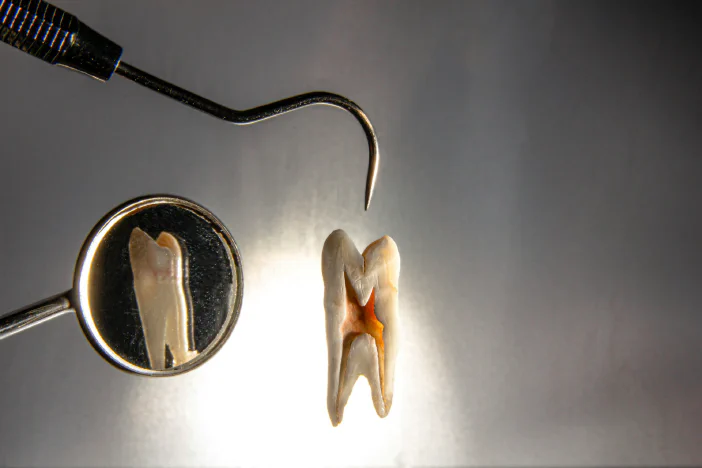
Losing a tooth creates an immediate question: what happens now? The gap left behind isn't just cosmetic. Remaining teeth can lean into the space, affecting how you bite. Food gets trapped more easily. The jawbone where the tooth used to be starts to resorb without stimulation from the root.
The options for replacing a missing tooth range from £200 for partial dentures to £2,600 and beyond for dental implants. That dramatic price spread exists because these aren't just different versions of the same solution. They're fundamentally different approaches to the same problem, each with distinct characteristics that matter depending on your situation.
What Actually Happens When You Lose a Tooth
When you lose a tooth and its root, the teeth on either side of the gap can lean into the space that's left, which causes bone loss over time. This isn't immediately visible, but it progresses steadily. The jawbone needs stimulation from tooth roots to maintain its density. Without that stimulation, it gradually resorbs.
This bone loss can eventually affect face shape as the jaw structure changes. It also makes future tooth replacement more complicated, since procedures like dental implants require sufficient bone density to hold the titanium post securely.
Replacing missing teeth addresses more than appearance. It protects remaining natural teeth from shifting, maintains proper bite alignment, and preserves jawbone structure. The question becomes which replacement method best achieves these goals for your specific situation.
The Three Main Approaches
Dentures, bridges, and implants represent three distinct philosophies for replacing missing teeth. Dentures sit on top of gums and can be removed. Bridges anchor to adjacent natural teeth. Implants replace the entire tooth structure including the root.
At Dentozen, we provide all three options because no single approach works best for every situation. A dental implant starting from £2,600 makes sense for certain cases. Traditional bridges or dentures prove more appropriate for others.
Removable Partial Dentures
Partial dentures cost between £200 and £1,000, making them the most affordable option for replacing missing teeth. They consist of replacement teeth attached to a plastic or metal framework that clips onto remaining natural teeth.
The affordability comes with tradeoffs. Dentures don't fit as securely as fixed options and can influence speech or chewing, making them a less comfortable long term solution for some people. They require removal for cleaning and overnight. The framework can become loose over time as gums change shape.
That said, dentures can be fabricated relatively quickly and inexpensively, which makes them practical when cost is the primary concern or when someone needs an immediate temporary solution while planning for permanent replacement.
For full dentures replacing entire arches, Dentozen offers acrylic dentures at £599, flexible dentures with a gum coloured base for superior comfort at £699, and chrome dentures with an ultra thin, strong metal framework at £799.
Traditional Fixed Bridges
A bridge essentially bridges the gap where a tooth once was. It involves replacing a missing tooth with a false tooth bonded to natural teeth on either side of the gap. Traditional fixed bridges typically cost £1,500 to £3,500 depending on materials and complexity.
The most common type consists of two crowns, made of porcelain or metal, which are permanently bonded to natural teeth either side of the space, with the false tooth or teeth in the middle. If the teeth either side of missing teeth are strong and healthy, an adhesive bridge becomes possible. This uses wings bonded to the inner surfaces of supporting teeth, avoiding the need to prepare neighbouring teeth for full coverage crowns.
Bridges offer a permanent solution without surgery. Unlike implants, they can replace missing teeth through a less invasive process. The catch is that adjacent natural teeth need preparation. Good teeth on either side get filed down to support the crowns, which compromises their long term structure and health.
Traditional bridges don't discourage bone loss. While they secure adjacent teeth and stop them from shifting, they don't have a screw placed into the jaw to fill the socket of the missing tooth. The jawbone continues to resorb over time without root stimulation.
Bridges spread chewing pressure to the adjacent teeth, which have usually been cut or filed down to support the crowns. This pressure can weaken the bridge over time. The cement holding it in place can wash out and wear, and bacteria on traditional bridges can decay supporting teeth more easily than with implant solutions.
Following bridge placement, there can be some soreness from the gum or slight sensitivity to hot and cold food and drinks. The new tooth may feel slightly strange initially because it's filling the gap that was present. These issues typically pass within a few days.
Bridges are permanently fixed in place and can't be removed for cleaning. Cleaning the gap under a bridge requires special dental floss techniques. With proper care, a bridge can last many years, though it will eventually require restoration treatment.
Dental Implants
Implants represent a fundamentally different approach. They're made from titanium and topped with a false tooth called a crown, made from porcelain or ceramic. The titanium post gets surgically placed into the jawbone to act as an artificial tooth root.
At Dentozen, a complete dental implant with crown starts from £2,600, which includes the implant, abutment, and crown. This higher initial cost reflects what implants actually do differently than other options.
Implants are the only tooth replacement treatment that replaces lost tooth roots, which preserves bone in the jaw. The titanium post integrates and fuses with the jawbone through a process called osseointegration, creating stable foundation that functions like a natural tooth root. This prevents the bone loss that occurs with bridges and dentures.
The implant can take as much pressure as a natural tooth because it's embedded into the jaw. Chewing force goes directly into the implant and jawbone rather than being distributed to adjacent teeth. Your jaw remains strong as you age, preventing bone loss that can impact face shape.
Implant treatment typically happens in two stages. First, the implant gets placed into the jaw, usually under local anaesthetic. Implants can only be placed in bone that's dense enough to hold them securely. If the jawbone doesn't have enough volume, treatment options like bone grafting at Dentozen starting from £595 can address the problem before implant placement.
The second stage, when the crown attaches, usually happens three to six months after the implant itself is placed. This healing period allows osseointegration to occur. During this time, temporary teeth can cover the gap.
With proper care, dental implants can last as long as natural teeth. They don't rely on cement or adhesives to stay in place. They avoid causing damage to adjacent healthy teeth, unlike bridges that require filing down neighbouring teeth.
The surgical nature of implant placement means more initial appointments and healing time compared to bridges. The higher cost reflects this complexity plus the long term value. While implants cost more upfront, they provide greater long term value because they endure longer and require less replacement than bridges or dentures.
Implant Supported Bridges
For multiple consecutive missing teeth, implant supported bridges offer a middle option. Instead of replacing each tooth with an individual implant, a bridge anchored by two or more implants can replace three to five missing teeth.
A two tooth implant bridge costs around £3,500. A four tooth implant bridge in the UK starts from £4,700 to £7,000 depending on materials and complexity. This approach costs less than placing individual implants for each missing tooth while still providing the bone preservation benefits that traditional bridges lack.
Implant bridges replace lost teeth without any support from adjacent teeth. They preserve bone through the implant posts while using fewer implants than individual tooth replacement would require. The bridge connecting the crowns distributes chewing forces across multiple implants, creating stable restoration.
The entire process takes at least three months, with temporary teeth available in the meantime. Placing the implants takes a few hours, and after sufficient healing time passes, the final prosthetic gets loaded onto the implants.
What Each Option Actually Preserves
The fundamental difference between these approaches shows up in what they preserve long term. Dentures preserve nothing. They sit on top of gums while bone loss continues underneath. Bridges preserve the position of adjacent teeth by preventing them from shifting, but bone loss continues at the extraction site.
Only implants preserve the actual bone structure by replacing the tooth root. This makes implants qualitatively different from other options, not just more expensive versions of the same thing. The titanium post stimulates the jawbone the way a natural tooth root would, maintaining bone density that other replacement methods can't.
This bone preservation matters for face structure. It matters for the long term health of adjacent teeth. It matters if you ever need additional dental work in that area. Sufficient bone density makes everything easier.
When Cost Creates the Decision
For many people, the choice isn't about which option is theoretically best. It's about what they can afford now versus what they might be able to afford later.
Dentures at £200 to £1,000 provide immediate functionality. Bridges at £1,500 to £3,500 offer permanent replacement without surgery. Implants starting from £2,600 provide long term value through bone preservation and durability.
Finance options can bridge the gap between immediate affordability and long term value. At Dentozen, treatments can be spread across manageable monthly payments, which sometimes makes the higher initial investment more accessible than it appears at first glance.
The cost per year calculation matters more than upfront price. A bridge lasting 10 years at £2,000 costs £200 per year. An implant lasting 25 years at £2,600 costs £104 per year. The implant proves less expensive over time despite the higher initial investment.
What Your Specific Case Requires
Understanding which replacement option suits your situation requires assessment of bone density, the health of adjacent teeth, how many teeth need replacement, and whether they're consecutive or scattered throughout the mouth.
Multiple missing teeth in a row might benefit from an implant supported bridge rather than individual implants. Strong healthy teeth adjacent to a single missing tooth might make a traditional bridge practical. Significant bone loss might require grafting before implant placement becomes possible.
At Dentozen, the new patient examination at £65 includes complete dental assessment and treatment planning. This creates the foundation for understanding which replacement approach makes sense for your specific situation rather than working from general assumptions.
If you're considering tooth replacement options in the Enfield area, book a consultation at Dentozen to discuss what your case actually requires. The price spread for tooth replacement reflects genuine differences in what each option accomplishes, and knowing which approach suits your situation matters more than knowing industry averages.